
Why Did I Suddenly Get So Many Cavities?
You've gone years without a single cavity, and then a checkup turns up three or four at once. It's a jarring moment — and it doesn't always mean your hygiene has slipped.
A sudden cluster of new cavities almost always has a specific cause behind it. Finding that cause matters more than blaming yourself for it.
Could Dry Mouth Be Behind It?
Saliva does more than keep your mouth comfortable. It washes away food particles, neutralizes the acid bacteria produce, and helps repair early enamel damage before it becomes a cavity. When saliva flow drops, that protection drops with it.
According to the American Dental Association, dry mouth is a side effect of more than 500 medications, including common ones for allergies, high blood pressure, anxiety, and depression. It's a leading reason people who've never struggled with cavities suddenly start getting several at once, especially later in life.
If you've started a new medication recently, mention it at your next visit, your dentist can factor it into how they protect your teeth going forward.
Has Something in Your Routine Changed?
Cavities often track quiet shifts in daily habits: more frequent snacking, a switch to sugary or acidic drinks, or less consistent brushing during a busy or stressful stretch. None of these changes need to be dramatic to make a difference — bacteria only need a steady supply of sugar and time between cleanings to do damage.
A stretch of frequent illness can play a role too. Breathing through your mouth while congested reduces saliva in the same way medication-related dry mouth does.
Could Receding Gums Be Exposing New Decay?
As gums pull back from the teeth, they expose the tooth root — and roots aren't protected by enamel. Root surfaces are covered by cementum, a much softer tissue, which decays more easily and is more sensitive to touch and temperature. Root decay is common in adults over 50, and it often shows up as several small cavities near the gumline rather than one obvious spot.
If you've noticed receding gums alongside your new cavities, the two are very likely connected.
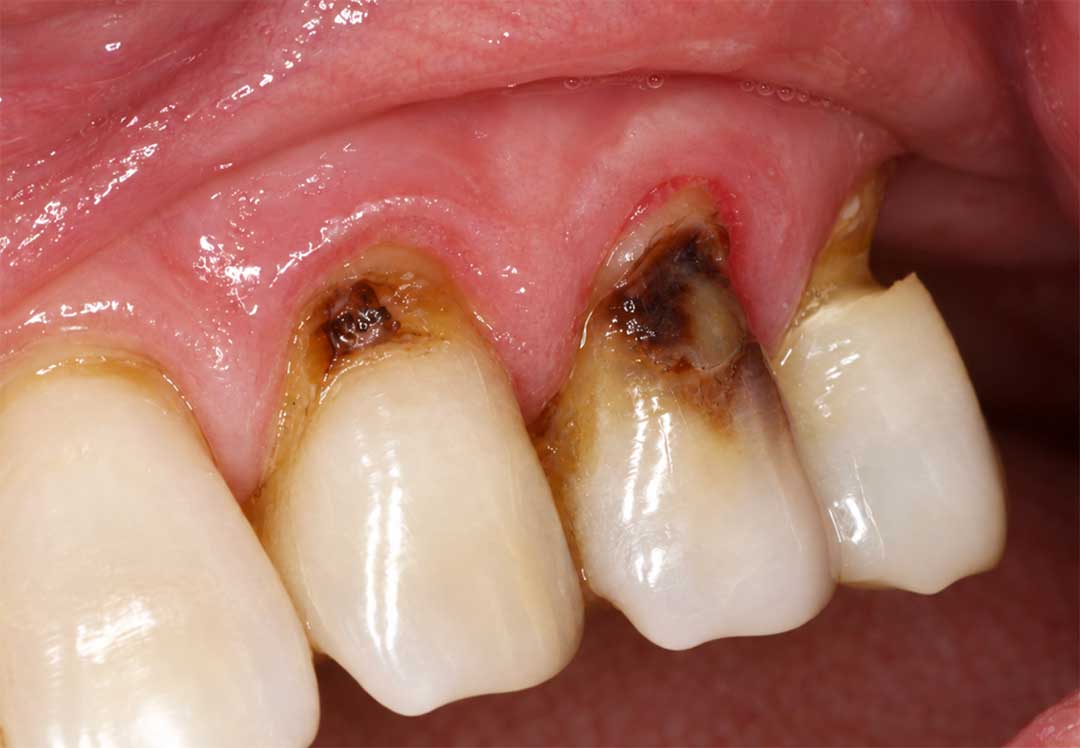
Root caries on an exposed tooth root
Could an Old Filling Be the Real Cause?
Fillings don't last forever. The same ADA source notes that older fillings can weaken and fracture or leak around their edges over time, letting bacteria collect in the gap and cause new decay right at the margin — often invisible to you, but visible to your dentist on an X-ray. This is one of the most common reasons older fillings need replacing, and it can look, from the patient's side, like several cavities appearing all at once.
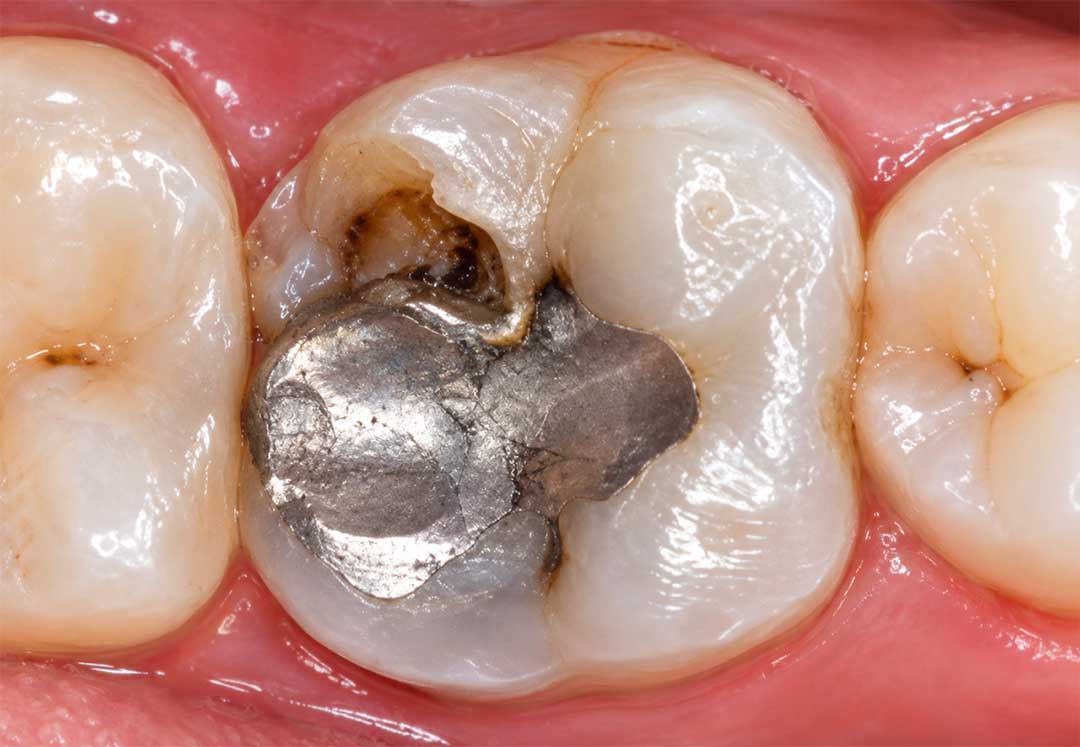
Tooth decay under an old dental filling
Have You Skipped a Few Checkups?
Early cavities don't usually hurt. A small area of decay can grow for months without any symptoms, which is exactly why routine checkups matter — they catch cavities while they're still small, before several show up at once at a delayed visit.
What Should You Do Next?
A sudden run of cavities is worth a real conversation with your dentist, not just a filling appointment. Your dentist will look at what's actually driving it — medication, diet, gum recession, an old filling, or something else — so the same cluster doesn't repeat at your next visit.
At Drs. Nicolas & Asp Centers, every checkup includes a full picture of what's changed since your last visit, so any pattern gets caught and addressed early rather than after it's already spread.
Ready to get to the bottom of it? Book an appointment at our Jumeirah, Dubai Marina Walk, The Springs Souk, or Uptown Mirdif center, and we'll help you find out what's actually driving it.
- American Dental Association. "Cavities." MouthHealthy, ADA. mouthhealthy.org/
- American Dental Association. "Dental Health Concerns — Adults Over 60." MouthHealthy, ADA. mouthhealthy.org