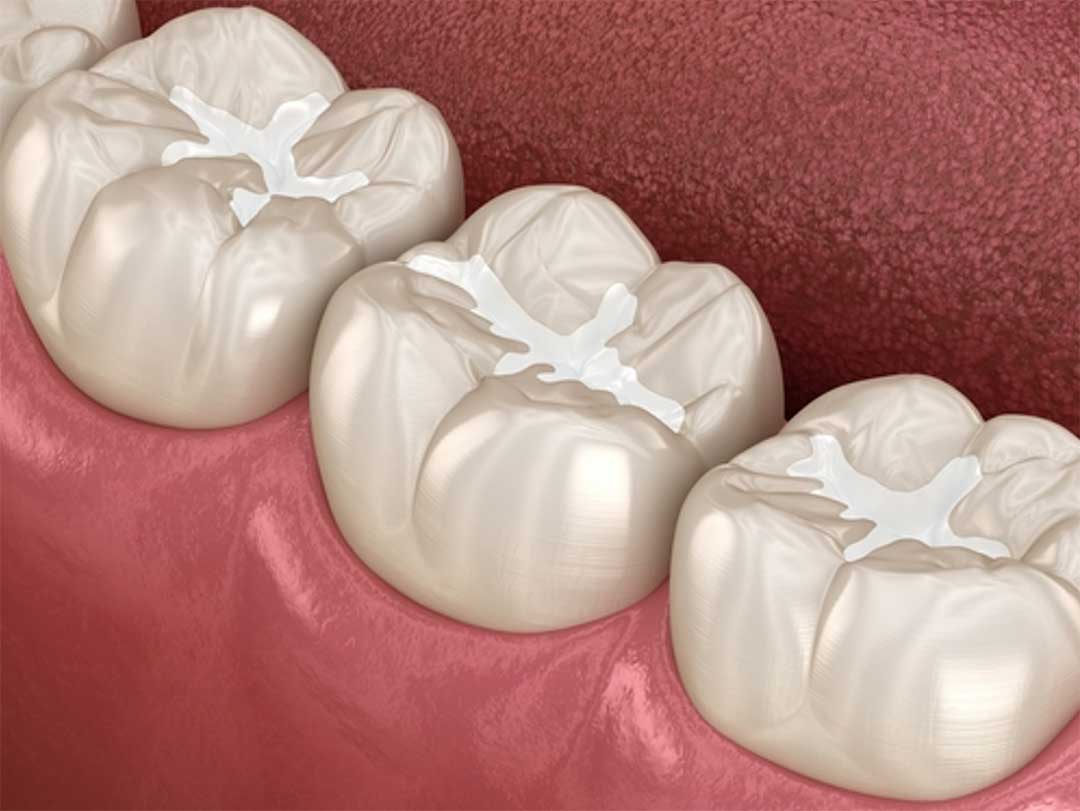
You've got a toothache and you're already dreading the dentist's answer. Will it be a quick fix — or the procedure everyone tries to avoid?
The truth is, most patients can't tell from symptoms alone whether they need a filling or a root canal. Both involve treating damage to a tooth, but they address very different levels of harm.
Here's what your dentist is actually looking for.
What a Filling Actually Does
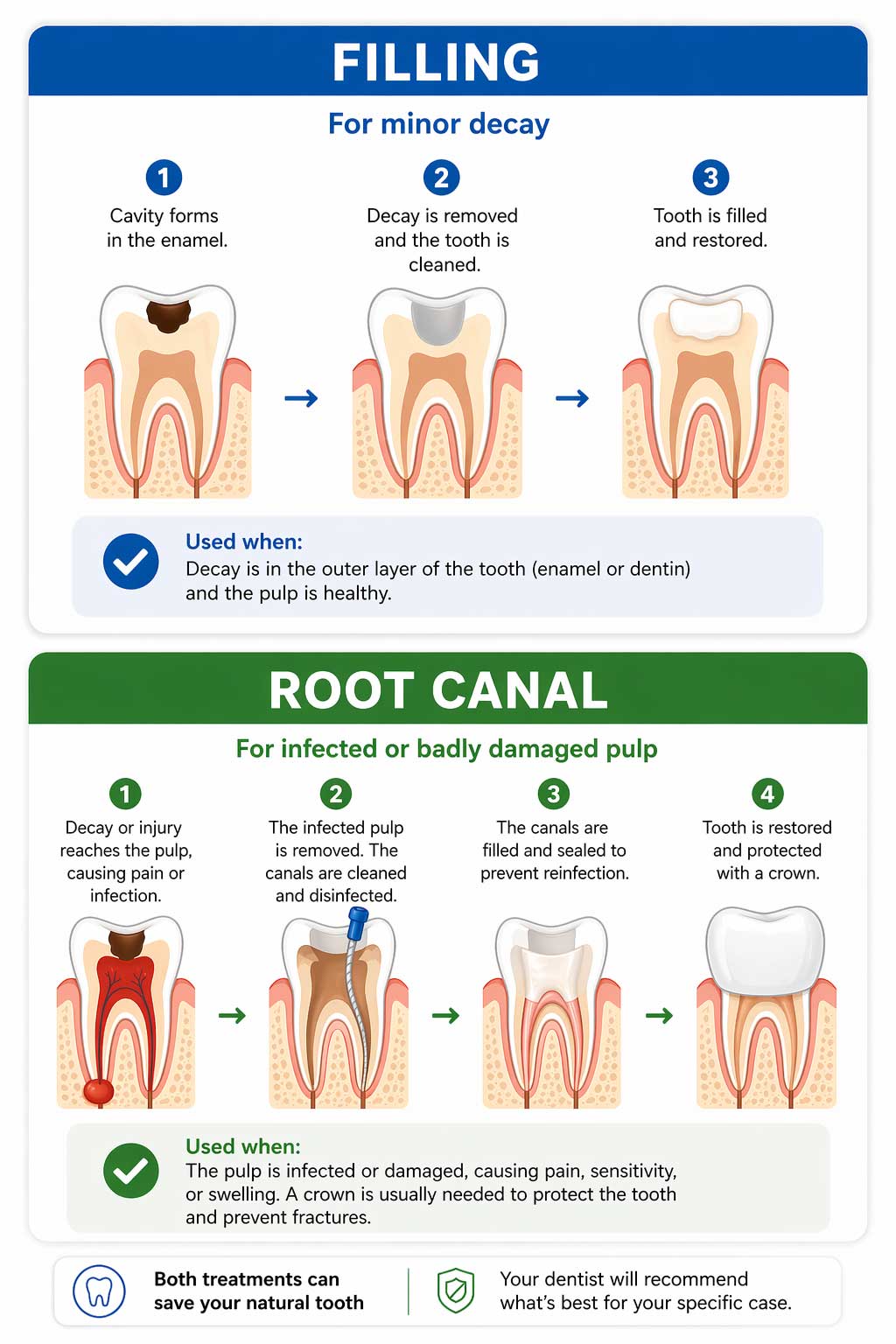
A dental filling repairs a tooth where decay has eaten through the outer enamel and into the layer beneath it, called dentin.
The decayed material is removed, and the space is filled with a tooth-colored composite material to restore the tooth's shape and function.
Fillings are the right solution when the damage stops there — when the innermost part of the tooth (the pulp) is untouched and healthy.
What a Root Canal Actually Does
A root canal (technically called root canal treatment, or endodontic treatment) goes further. When decay or damage reaches the pulp — the soft tissue at the tooth's core, containing nerves and blood vessels — the pulp becomes infected or inflamed. At that stage, a filling cannot fix the problem.
During root canal treatment, the infected pulp is carefully removed, the canals inside the root are cleaned and shaped, and the tooth is sealed. A dental crown is usually placed afterward to protect the treated tooth long-term.
The goal of root canal treatment is to save a tooth that would otherwise need to be extracted.
The Key Difference Between the Two
The deciding factor is not how much pain you're in — it's how deep the damage goes.
- Dental fillings – when the decay or damage is contained to the enamel and dentin. The pulp is healthy.
- Root canal therapy – when the decay or infection has reached the pulp, or the tooth's nerve is affected.
Only a clinical examination and X-ray can confirm which level you're dealing with.
Signs You Likely Need a Filling
These symptoms suggest the damage may still be at a stage where a filling can resolve it:
Mild sensitivity that disappears within seconds is often a sign the pulp is still intact and healthy. That's a likely filling scenario, though only an X-ray can confirm what's actually happening inside the tooth.
Signs You May Need a Root Canal
These symptoms point toward pulp involvement, which a filling cannot address:
A dental abscess — where pus collects at the root tip due to bacterial infection — is a clear sign that the pulp has been compromised. This always requires treatment beyond a filling.
It's also worth knowing: some teeth with pulp damage cause no pain at all. This is especially common in older teeth where the nerve has slowly died. An X-ray will reveal the problem before you feel it.
Why Getting This Wrong Matters
Placing a filling over a tooth that actually needs a root canal will not fix the underlying infection. The bacteria remain.
Left untreated, pulp infection doesn't stay contained to the tooth. It can spread to the surrounding bone, adjacent teeth, and in serious cases, to other parts of the face and jaw. What was a manageable problem becomes a much more complicated one.
The earlier pulp involvement is caught, the better the outcome — and often, the simpler the treatment.
What to Expect at Your Appointment
When you come in with tooth pain, your dentist will:
Based on these findings, they'll know exactly what the tooth needs — and explain your options clearly before any treatment begins.
At Drs. Nicolas & Asp Centers, root canal treatment is performed by a Specialist Endodontist — a dentist with advanced specialist training specifically in root canal procedures. This matters for both the precision of the treatment and the comfort of the experience.
Frequently Asked Questions
Yes. A tooth with a dying or already-dead pulp may cause little to no pain because the nerve is no longer functioning. Infection can be present and visible on an X-ray before any pain develops. This is one reason regular dental checkups, even when you feel fine, are so important.
Both procedures are performed under local anesthesia, so the treatment itself should not be painful. Root canal treatment has a strong reputation for being painful, but this largely reflects the pain of the infection that preceded it. Most patients are surprised by how straightforward the procedure feels.
The filling will not address the infected pulp. The infection will continue, likely causing worsening pain, swelling, and potential spread to surrounding tissue. In time, the tooth may need to be extracted and a more complex situation will need to be managed.
In many cases, yes — root canal treatment is specifically designed to save a tooth that decay or infection has reached. However, if the tooth structure is too severely compromised, extraction and replacement (such as a dental implant) may be the more appropriate long-term solution. Your dentist will advise on what's viable for your specific tooth.
Many dental insurance plans in the UAE include coverage for root canal treatment, though the extent of cover varies by policy. At Drs. Nicolas & Asp Centers, we accept most major insurance cards for direct billing and handle all pre-approvals and paperwork on your behalf. Visit Insurance & Payment Options for details, or call us and we'll check your cover before your appointment.
If you're experiencing tooth pain — even if it seems minor — it's worth having it looked at. A simple X-ray can tell you exactly what you're dealing with before a small problem becomes a bigger one. Book an appointment or call us on 04 394 7777. We see patients at our four Dubai locations: Jumeirah, Marina Walk, Springs Souk, and Uptown Mirdif.