Both Invisalign and braces can straighten teeth effectively. At Drs. Nicolas & Asp Centers, both treatments are planned and delivered by Specialist Orthodontists. And with proper retainer wear afterward, both can give you results that last.
So how do you choose between them?
For most patients, both options may be possible. The real difference lies in the treatment experience, day-to-day practicalities, and which option best suits your case, lifestyle, and expectations.
Here is a clear-eyed look at both.
How Invisalign and Braces Work
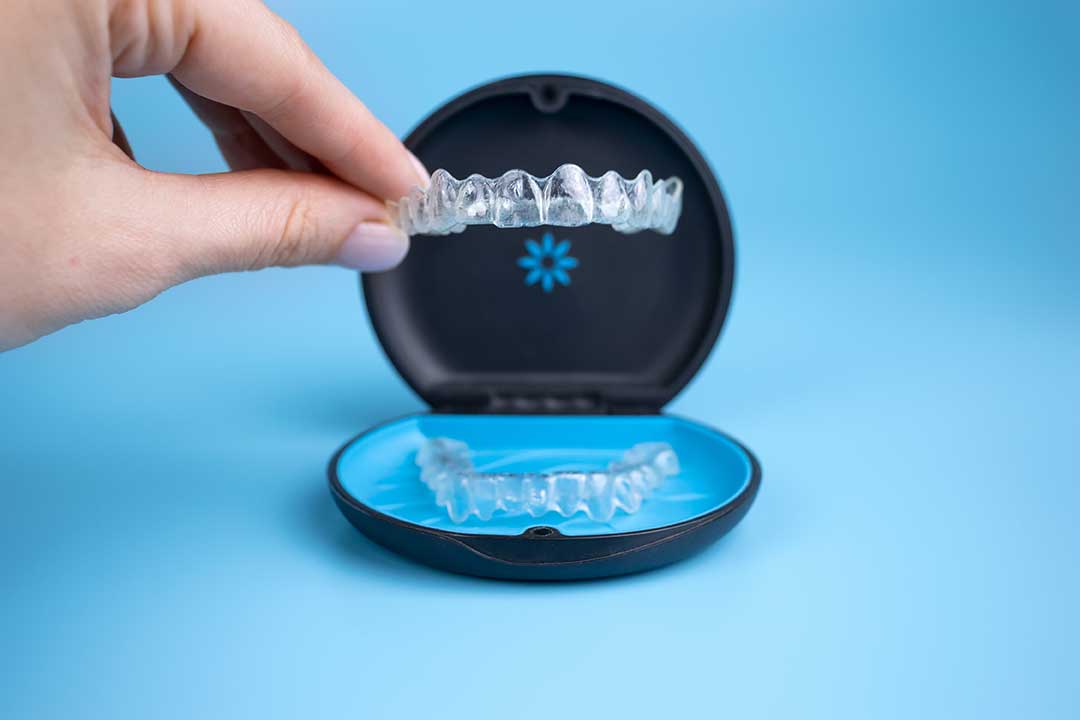
Invisalign uses a series of custom-made, removable clear aligners to shift teeth gradually into position. Each aligner moves your teeth by a fraction of a millimetre, and you progress through the series over the course of your treatment. Aligners are worn for 20 to 22 hours a day and removed for eating, drinking, and cleaning.
Braces use brackets bonded to the teeth and connected by a wire, which your Specialist Orthodontist adjusts at regular appointments to guide tooth movement. Unlike aligners, braces are fixed — they work continuously, without depending on the patient to keep them in.
Both approaches move teeth by applying gentle, sustained pressure. The underlying biology is the same. The delivery method is different.
How Do They Compare
| Invisalign | Braces | |
|---|---|---|
| Appearance | Virtually invisible | Metal braces are visible; ceramic braces are less noticeable; lingual braces are hidden behind the teeth |
| Comfort | Smooth plastic; some pressure when changing aligners, settles quickly | Initial bracket irritation; tenderness for a day or two after wire adjustments |
| Eating | No restrictions — remove aligners for all meals | Avoid hard, sticky, or crunchy foods throughout treatment |
| Oral hygiene | Remove aligners and brush and floss normally | More careful cleaning required around brackets and wires |
| Wear requirement | Must be worn 20 to 22 hours a day — patient-dependent | Fixed to the teeth — works around the clock |
| Removability | Removable for eating, drinking, and cleaning | Fixed for the duration of treatment |
| Case range | Mild to complex — crowding, spacing, overbite, crossbite, open bite | All case types, including complex skeletal corrections |
When Braces May Be the Better Choice
Your Specialist Orthodontist may recommend braces in cases involving:
- Significant tooth rotations or complex vertical movements
- Skeletal bite issues that require surgical or combined orthodontic-surgical treatment
- Cases where continuous, precisely controlled force application is critical
- Younger patients, where consistent aligner wear may be harder to maintain
When Invisalign May Be the Better Choice
Invisalign works well for a wide range of cases — from mild crowding and spacing to overbites, crossbites, and open bites — and is particularly well-suited to patients who:
| Patient profile | Why Invisalign suits them |
|---|---|
| Working adults | Virtually invisible during treatment |
| Active social lifestyle | No dietary restrictions; easy to remove |
| Strong compliance | Can commit to 20 to 22 hours wear per day |
| Existing dental work | Preserves aesthetics around crowns or veneers |
| Mild to complex malocclusion | Treats a wide range of bite and alignment issues |
What About Lingual, Ceramic, and Damon Braces
For patients who want fixed treatment but prefer something less visible, there are alternatives to standard metal braces.
| Type | What it is | Best suited to |
|---|---|---|
| Ceramic braces | Tooth-colored brackets — far less visible than metal | Patients who want fixed treatment with a discreet look |
| Lingual braces | Fitted to the backs of the teeth — completely hidden from view | Patients who want fixed treatment with no visible hardware |
| Damon braces | Self-ligating system that reduces friction, often fewer adjustments | Patients looking for a more comfortable fixed appliance experience |
Each option has its own considerations in terms of comfort, cost, and suitability. Your Specialist Orthodontist will advise which is most appropriate for your case.
How to Decide
The right choice is the one that works best for your teeth, your case, and your life — not the one that's most popular.
A consultation with an orthodontist is the only reliable way to know which option is genuinely right for you. They will assess your bite, review your dental history, and give you a clear recommendation — along with the reasoning behind it.
Book your consultation at our Jumeirah, Marina Walk, Springs Souk, or Uptown Mirdif centers, or call us on 04 394 7777.
Frequently Asked Questions
For most cases, yes. Both Invisalign and braces are proven orthodontic treatments that produce lasting results when delivered by a Specialist Orthodontist. Effectiveness depends on case complexity — and on patient compliance. With braces, that means attending all scheduled adjustment appointments. With Invisalign, it means wearing aligners for 20 to 22 hours a day as directed. Your orthodontist will advise which is best suited to your specific situation.
Yes. Many orthodontic patients are adults, and age alone is not a barrier to treatment. Invisalign is especially popular with adults because the aligners are discreet, removable, and easier to fit into daily routines. For those who prefer fixed treatment, ceramic braces and lingual braces can also be excellent options, offering a more discreet alternative to traditional metal braces.
Orthodontic coverage varies depending on your individual insurance plan. At Drs. Nicolas & Asp Centers, we accept most major insurance cards for direct billing and handle all pre-approvals and paperwork on your behalf. Visit Insurance & Payment Options or call us at 04 394 7777 and we will be more than happy to check your coverage for you.