You've had the headache checked out. Maybe the ears too. Nothing's wrong, but the pain keeps coming back — right around the temple, or deep in the ear, or both.
For a surprising number of people, the real source is the jaw.
Why Jaw Problems Feel Like Headaches or Earaches
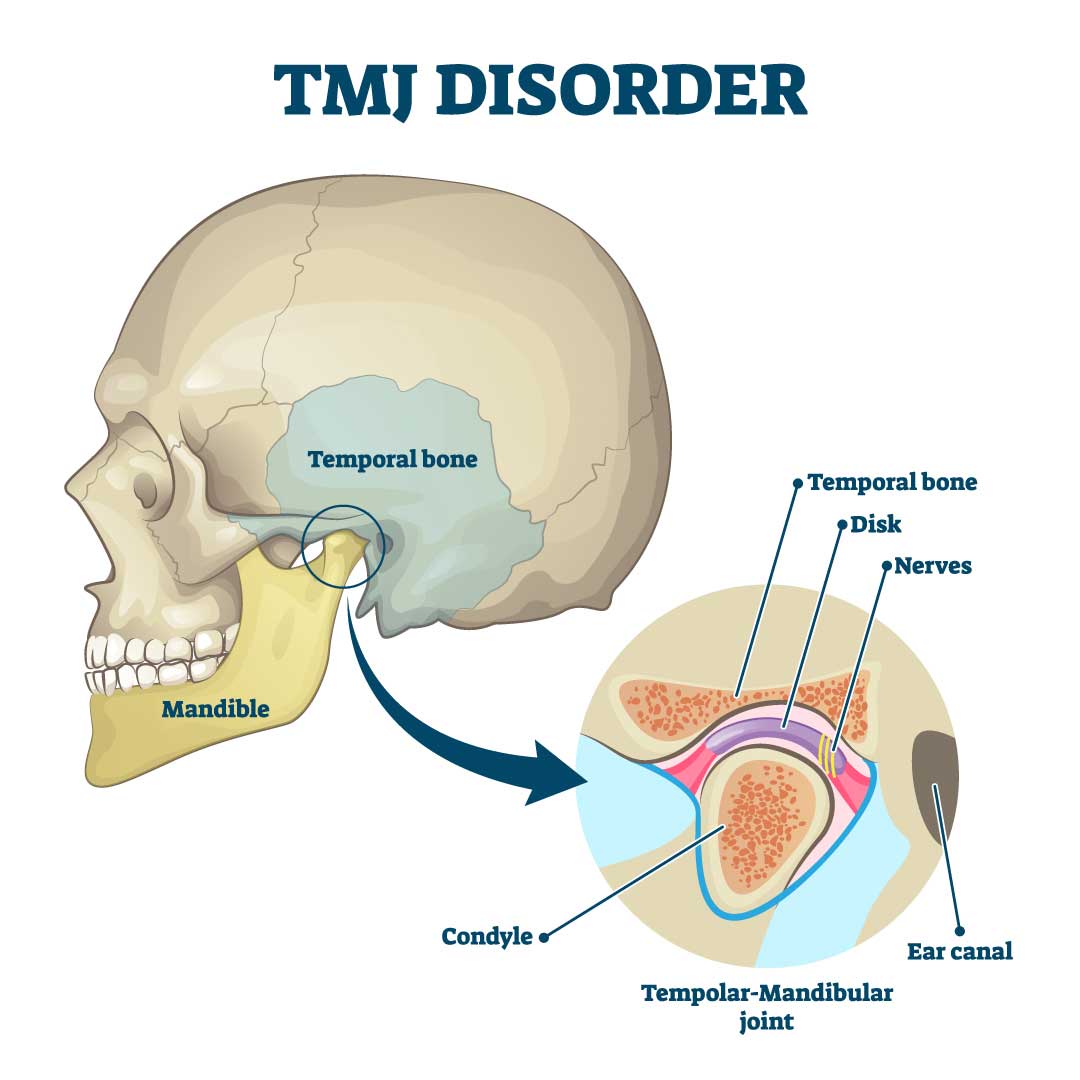
The temporomandibular joint sits just in front of each ear, where the lower jaw meets the skull. It's one of the most-used joints in the body — working every time you talk, chew, or yawn — and when it becomes strained, inflamed, or misaligned, the discomfort doesn't always stay put.
According to the American Association of Oral and Maxillofacial Surgeons, headaches and earaches are two of the most commonly reported symptoms of temporomandibular disorder (TMD), alongside jaw or cheekbone pain, difficulty opening the mouth fully, and ringing in the ears. Because the joint sits so close to the ear canal and shares surrounding muscle tissue, pain that starts in the jaw can easily be felt as an earache or a tension-type headache instead.
This is exactly why TMD is so often missed. A headache gets treated as a headache. An earache gets treated as an ear infection. The jaw, sitting quietly at the source, never comes up.
How to Tell TMJ Pain From Other Causes
A few patterns are worth paying attention to:
- The pain tends to worsen with chewing, talking, or wide yawning
- It's often accompanied by clicking, popping, or a jaw that feels stiff first thing in the morning
- An earache with TMD usually comes without the other signs of an ear infection, like fever or drainage
- The pain may sit right in front of the ear rather than deep inside it
None of these on their own confirm TMD — that takes a proper evaluation. But if headaches or earaches keep recurring without another clear cause, and your jaw has been part of the picture (clicking, soreness, morning stiffness), it's worth mentioning to your dentist rather than only chasing the headache or the ear separately.
What to Do Next
TMD is usually very manageable once correctly identified. Most cases respond to conservative treatment — a custom bite splint, short-term medication, or physical therapy — long before anything more involved is needed. The harder part is often just connecting the dots between a jaw problem and symptoms that seem to show up everywhere except the jaw.
At Drs. Nicolas & Asp Centers, our TMJ Speciality & Orofacial Pain Center evaluates exactly this kind of overlap — headaches, ear symptoms, and jaw pain together — to find out whether TMD disorder is the common thread. If chronic teeth grinding is part of what's driving your symptoms, it's also worth learning more about bruxism, a common contributing habit.
If this sounds familiar, book an appointment and let our team help you find out what's actually behind it.