If a pediatric dentist has suggested fissure sealants for your child and you're not quite sure what they are — or whether they're really necessary — this guide will walk you through the basics.
The short answer: fissure sealants are one of the most effective preventive tools available in pediatric dentistry, and the right child at the right time can benefit significantly from them.
What Fissure Sealants Are
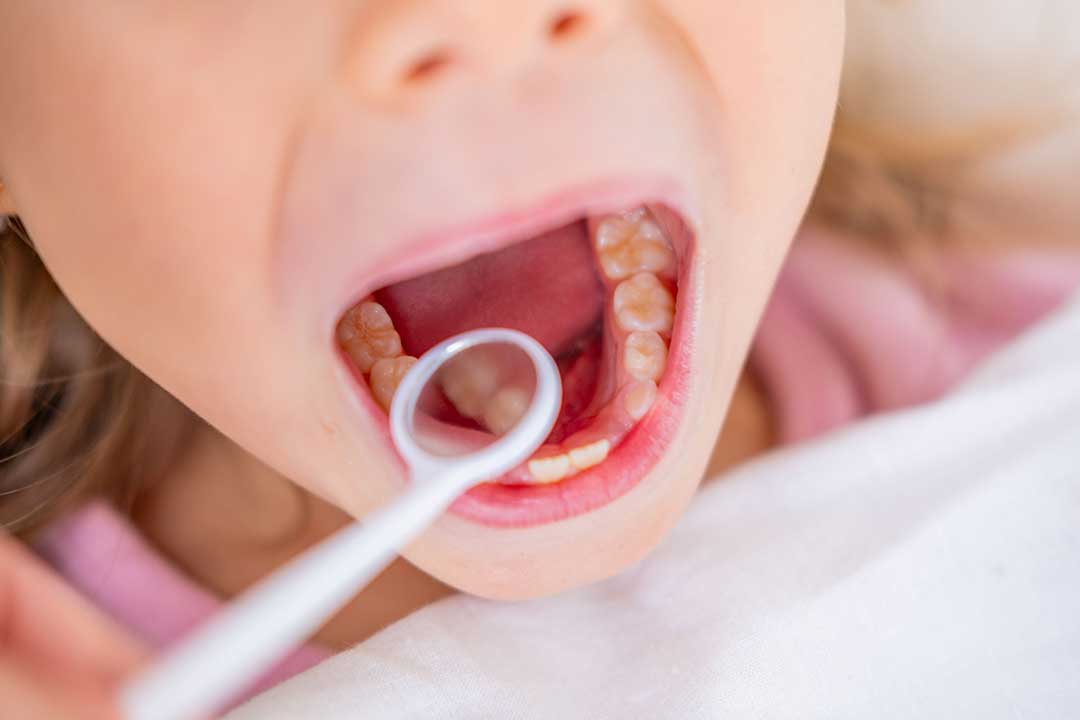
A fissure sealant is a thin protective coating, usually made from a tooth-colored resin, that is applied to the chewing surfaces of the back teeth.
Those surfaces (the molars and premolars) are covered in natural pits and grooves called fissures. These grooves are there to help grind food, but they also trap food particles and bacteria in ways that brushing simply cannot reach.
A sealant fills those grooves and creates a smooth, sealed surface that is far easier to clean and far harder for decay to take hold.
Why Back Teeth Are So Vulnerable
To understand why sealants matter, it helps to understand what makes molars different from other teeth.
The biting surface of a molar is not flat — it is a landscape of peaks and valleys, and some of those valleys are narrower than a single toothbrush bristle. No matter how carefully a child brushes, certain grooves will remain partially or fully unreached.
Bacteria settle into these fissures, feed on sugars, and produce acid. That acid is what starts the decay process. In children, whose enamel (the outer layer of the tooth) is still maturing and therefore slightly more vulnerable, this can progress quickly.
A sealant fills those grooves completely, leaving bacteria nowhere to settle and nothing to feed on.
See also
When Should Children Brush Their Teeth on Their Own?
Who Benefits Most from Sealants
Fissure sealants are a preventive treatment, and like all prevention, the earlier and more broadly they are applied, the better the outcome. Most children with permanent molars are candidates — the question is timing and which teeth are the priority. The pediatric dentist will assess your child's eruption stage and individual risk factors to determine the right approach.
That said, sealants are most commonly recommended for:
Sealants are applied to permanent teeth, not primary (baby) teeth, in most cases — though there are situations where a pediatric dentist may recommend them for a primary molar that needs to be preserved longer.
The timing matters. Sealants work best when applied shortly after the tooth has fully erupted and before any decay has begun. Once a cavity has formed in a fissure, a sealant alone is no longer the appropriate treatment.
What to Expect at the Appointment
The sealant procedure is straightforward, painless, and takes only a few minutes per tooth.
The pediatric dentist will:
There is no drilling, no anesthetic required, and no recovery time. Most children tolerate the procedure easily, even those who are nervous about dental visits.
At Drs. Nicolas & Asp Centers, sealants are applied by Specialist Pediatric Dentists — not general dentists or hygienists — ensuring that the assessment, application, and follow-up are handled by someone specifically trained in children's dentistry.
See also
Should Children Use Mouthwash? A Guide for Parents
Ready to find out if your child is a candidate for fissure sealants? Book an appointment with our pediatric team at one of our four Dubai locations — Jumeirah, Marina Walk, Springs Souk, and Uptown Mirdif. Call us on 04 394 7777 or book online.
Frequently Asked Questions
Fissure sealants have a well-established safety record and are recommended by leading pediatric dental organizations worldwide, including the American Academy of Pediatric Dentistry. The materials used are biocompatible and the procedure involves no drilling or anesthetic. If you have specific concerns, the Specialist Pediatric Dentist at your child's appointment will be happy to discuss the materials used and answer any questions.
The most common timing is when the first permanent molars erupt, which typically happens around age 6 to 7. The second permanent molars usually come through between ages 11 and 13, and sealants may be recommended at that stage as well. Your child's Specialist Pediatric Dentist will advise based on eruption timing and individual risk.
No. Sealants are applied selectively — typically to the molars and premolars that have deep grooves and are most susceptible to decay. Front teeth have smoother surfaces that are easier to clean and are rarely candidates for sealants. The Specialist Pediatric Dentist will assess which teeth, if any, would benefit.
A properly applied sealant significantly reduces the risk of decay on the grooved surfaces it covers. However, sealants do not protect the sides of teeth or the spaces between teeth — regular brushing, flossing, and dental visits remain essential. Sealants should also be checked at routine appointments to ensure they remain intact.
Coverage varies depending on your insurance plan and your child's age at the time of treatment. At Drs. Nicolas & Asp Centers, our team handles pre-approvals and paperwork on your behalf. For full details on accepted insurance and payment options, visit Insurance & Payment Options.
- Wright, John T., et al. "Evidence-Based Clinical Practice Guideline for the Use of Pit-and-Fissure Sealants: A Report of the American Dental Association and the American Academy of Pediatric Dentistry." Pediatric Dentistry, vol. 38, no. 5, 2016, pp. E120–E136. American Academy of Pediatric Dentistry. aapd.org
- Ahovuo-Saloranta, Anneli, et al. "Pit and Fissure Sealants for Preventing Dental Decay in Permanent Teeth." Cochrane Database of Systematic Reviews, no. 7, 2017, Article CD001830. pubmed.ncbi.nlm.nih.gov
- American Dental Association. "Dental Sealants." ADA.org, updated October 2025. ada.org