
You brush twice a day. That's a solid foundation. But toothbrush bristles can't reach the spaces between your teeth — and those tight gaps are where plaque accumulates, hardens, and quietly causes damage over time.
That's where interdental cleaning comes in. The debate is simply about which tool does it best: traditional dental floss, or a water flosser?
The short answer: both work.
The better answer: the right one depends on your mouth, your habits, and your oral health history. Here's what the evidence actually says.
Why Interdental Cleaning Matters
Plaque — a sticky film of bacteria — accumulates constantly between your teeth and just below your gumline. Left undisturbed, it hardens into tartar (also called calculus), which can only be removed professionally.
Unchecked plaque buildup leads to gingivitis (early-stage gum disease characterized by inflamed, bleeding gums) and eventually periodontitis, a more serious infection that damages the bone supporting your teeth.
The American Dental Association (ADA) recommends cleaning between your teeth once every day as an essential part of any oral hygiene routine — regardless of which tool you use to do it.
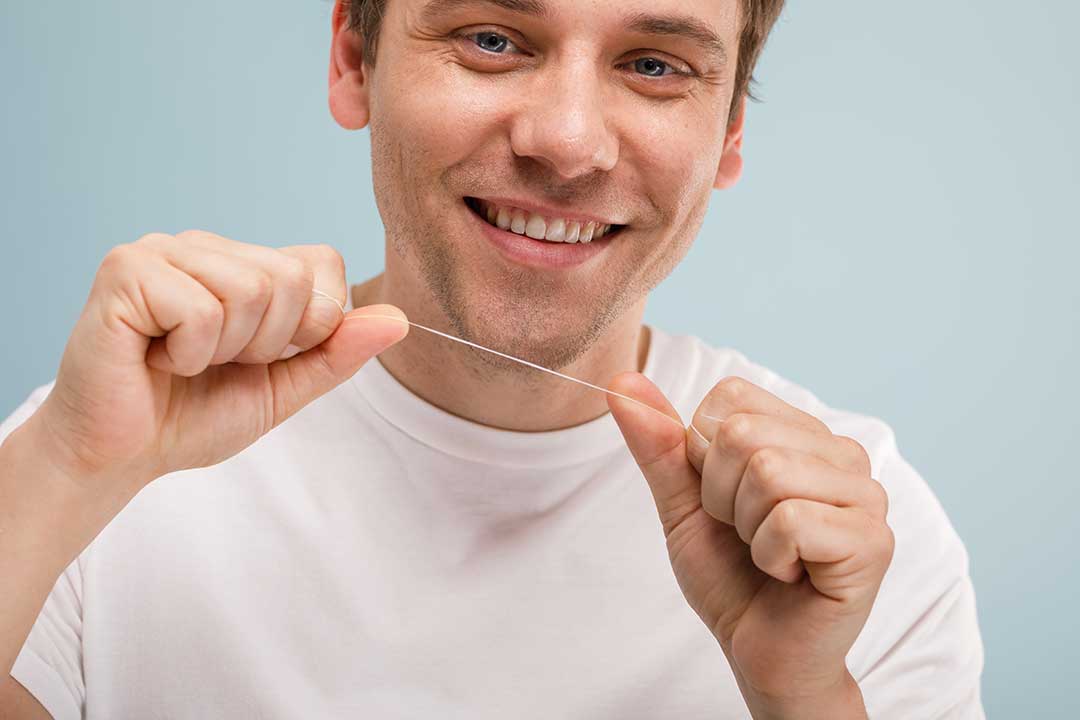
How Dental Floss Works
Dental floss is a thin strand — waxed, unwaxed, or tape-style — that slides between your teeth and curves around each tooth surface in a C-shape.
This mechanical action physically scrapes plaque from the tooth surface before it can harden. Done correctly, floss reaches slightly below the gumline, disturbing the bacterial film right where gum disease begins.
Strengths of Dental Floss
- Precise contact with tooth surfaces, especially in tight spaces
- No equipment required — portable, low-cost, and available everywhere
- The longest clinical track record of any interdental tool
- Effective for most healthy adult mouths with standard tooth spacing
Limitations of Dental Floss
- Requires good technique — ineffective or inconsistent flossing is common
- Can be difficult or uncomfortable for patients with tight contacts, sensitive gums, or limited hand dexterity
- Tricky to use around braces, bridges, or implants — you'll need a floss threader or orthodontic flosser to get underneath wires and around fixtures
- Compliance is consistently low — studies suggest fewer than one in three adults floss daily
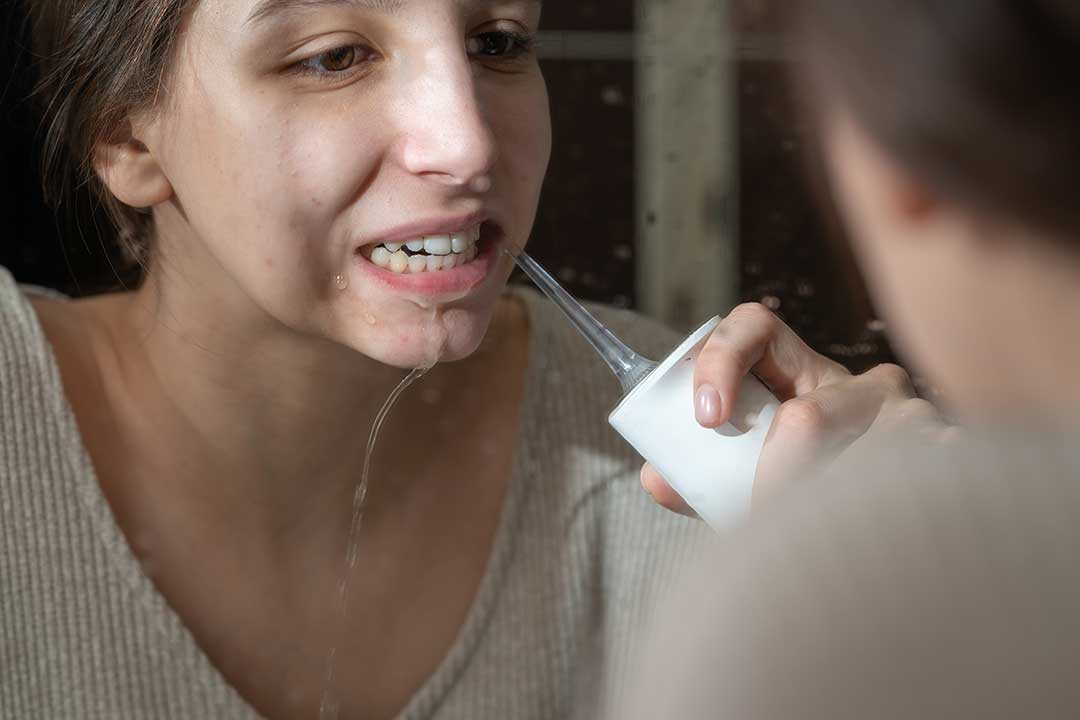
How a Water Flosser Works
A water flosser (oral irrigator) is a handheld device that delivers a pressurized, pulsating stream of water between your teeth and along the gumline.
The combination of water pressure and pulsation dislodges food debris and disrupts the bacterial biofilm in areas that floss — and certainly a toothbrush — can't easily reach.
Water flossers that carry the ADA Seal of Acceptance have been independently evaluated for safety and efficacy in reducing plaque and gingivitis. That's not a marketing claim — it's a requirement the manufacturer must prove with clinical data.
Strengths of a Water Flosser
- Easier to use for patients with limited dexterity, arthritis, or coordination challenges
- Excellent for cleaning around braces, bridges, implants, and crowns
- Effective at reducing gingival bleeding and inflammation
- Reaches into periodontal pockets (deeper gum spaces) more readily than floss
- Shown to reduce oral malodor (bad breath) when used consistently
Limitations of a Water Flosser
- Higher upfront cost and requires a power source or charging
- Less practical for travel than a small floss container
- Does not physically scrape tooth surfaces the same way floss does
- Requires proper maintenance — rinse the reservoir after each use and replace nozzle tips every 3–6 months to minimize bacterial buildup
Head-to-Head Comparison
Here's how the two methods compare across the outcomes most patients care about:
| Dental Floss | Water Flosser | |
|---|---|---|
| Plaque removal | Excellent in tight spaces | Strong overall, especially in hard-to-reach areas |
| Gum inflammation (gingivitis) | Effective with consistent use | Effective — some studies show comparable results |
| Bleeding reduction | Effective with good technique | Particularly strong for bleeding reduction |
| Ease of use | Straightforward once you know how | Easier for patients with dexterity challenges |
| Around braces / implants | Possible with a threader or orthodontic flosser | Excellent |
| Portability | Very high — fits in any bag or pocket | Lower — requires charging or a power source |
| Cost | Very low | Higher upfront investment |
There's no universal right answer here. What works for your neighbor may not suit your mouth. The best tool is the one you'll realistically use every day — whatever that happens to be will always outperform the one gathering dust in your bathroom cabinet.
Who Should Use Which
Dental Floss Is Typically Better If You:
- Have healthy gums and standard tooth spacing
- Are comfortable with the technique and floss consistently
- Prefer a portable, low-maintenance option
- Are cavity-prone and want maximum contact with tight interproximal surfaces
A Water Flosser May Be the Better Choice If You:
- Have braces, a fixed bridge, implants, or crowns
- Have been diagnosed with gum disease or have deeper gum pockets
- Struggle with manual dexterity (e.g., due to arthritis)
- Find traditional flossing painful, difficult, or off-putting
- Want a tool that's more likely to get used every day
Special Considerations
Orthodontic patients: Cleaning around brackets and wires takes a little extra effort with string floss — a floss threader or water flosser makes it significantly easier.
Implant patients: Both tools can be used around implants. If you opt for a water flosser, look for a low-pressure setting or a dedicated implant tip to protect the surrounding tissue.
Gum disease patients: If you've been told you have gingivitis or periodontitis, your dentist or hygienist will advise on the best approach for your situation — this may include a water flosser, string floss, or a combination of both.
Can You Use Both?
Yes — and for some patients, combining both is the most effective approach.
Using floss first, then a water flosser, can address both the mechanical plaque removal that string provides and the flushing of loosened debris and bacteria that a water flosser delivers. Your dental hygienist can advise on which sequence and combination suit your specific situation.
The non-negotiable is consistency. Cleaning between your teeth once a day — with whatever tool you'll reliably use — is far more valuable than the occasional perfect flossing session.
Ask Your Hygienist at Drs. Nicolas & Asp
If you're unsure which method is right for your mouth, the hygiene team at Drs. Nicolas & Asp Centers can walk you through your options during your routine appointment.
We'll look at your tooth spacing, gum health, any restorations you have, and your existing habits — and give you a recommendation that's specific to you, not generic advice pulled from the internet.
Our four Dubai clinics — Jumeirah, Marina Walk, Springs Souk, and Uptown Mirdif. Call us on 04 394 7777 or book online.
Frequently Asked Questions
A water flosser is an effective alternative to dental floss for many patients, particularly those with braces, implants, or gum disease. However, it does not physically scrape tooth surfaces the way string floss does. Your dentist or hygienist can advise on whether a water flosser alone is sufficient for your specific oral health situation.
Yes. Water flossers with the ADA Seal of Acceptance have been tested and shown to remove plaque and reduce gingivitis effectively. Multiple clinical studies have demonstrated that they can be equal to or more effective than string floss — particularly for reducing gingival inflammation and bleeding.
The ADA states that either order is acceptable — what matters most is that you do both thoroughly, every day. Some research suggests flossing first may help fluoride from your toothpaste reach between your teeth more effectively, but the evidence on sequence is not conclusive. If you'd like a personalised recommendation based on your routine, ask your hygienist at your next visit.
Yes. Water flossers are generally well-suited for implant maintenance. Look for a device that allows pressure adjustment, and use a lower setting or an implant-specific tip to clean around the implant and its restoration without disrupting the surrounding tissue.
Once daily is the standard recommendation from the ADA and the American Dental Hygienists' Association.The timing matters less than the consistency — building it into either your morning or evening routine is more important than which time you choose.
Research has found that daily water flossing added to regular brushing can meaningfully reduce oral malodor in patients with gingivitis. This is largely because water flossing helps remove the bacteria between teeth and below the gumline that are a primary driver of bad breath.
- American Dental Association. "Floss/Interdental Cleaners." ADA Oral Health Topics, 2023. ada.org
- American Dental Association. "Water Flossers and Water Flossing." MouthHealthy, 2023. mouthhealthy.org
- American Dental Association. "Flossing." MouthHealthy, 2023. mouthhealthy.org
- Mancinelli-Lyle, D., Qaqish, J.G., Goyal, C.R., Schuller, R. "Efficacy of Water Flossing on Clinical Parameters of Inflammation and Plaque: A Four-Week Randomized Controlled Trial." Journal of Dental Hygiene, vol. 97, no. 5, 2023, pp. 166–175. jdh.adha.org
- Mohapatra, S., Rajpurohit, L., Mohandas, R., Patil, S. "Comparing the Effectiveness of Water Flosser and Dental Floss in Plaque Reduction Among Adults: A Systematic Review." Journal of Indian Society of Periodontology, vol. 27, 2023, pp. 559–567. pmc.ncbi.nlm.nih.gov
- Worthington, H.V., et al. "Home Use of Interdental Cleaning Devices, in Addition to Toothbrushing, for Preventing and Controlling Periodontal Diseases and Dental Caries." Cochrane Database of Systematic Reviews, 2019. cochranelibrary.com
- Lam, O.L., et al. "Should Water Flossing Become an Integral Part of Oral Hygiene?" British Dental Journal, vol. 238, 2025, p. 590. nature.com
- Mayo Clinic Staff. "Dental Floss vs. Water Flosser: Which Is Better?" Mayo Clinic, January 2025. mayoclinic.org