Losing a tooth — whether from decay, injury, or extraction — raises one immediate question for most patients: what comes next?
Two options come up most often in that conversation: dental bridges and dental implants. Both replace a missing tooth. Both look and function like natural teeth. But they work very differently, suit different patients, and carry different long-term implications.
This guide breaks down exactly what each option involves, who it's right for, and what the decision-making process looks like.
What is a Dental Bridge
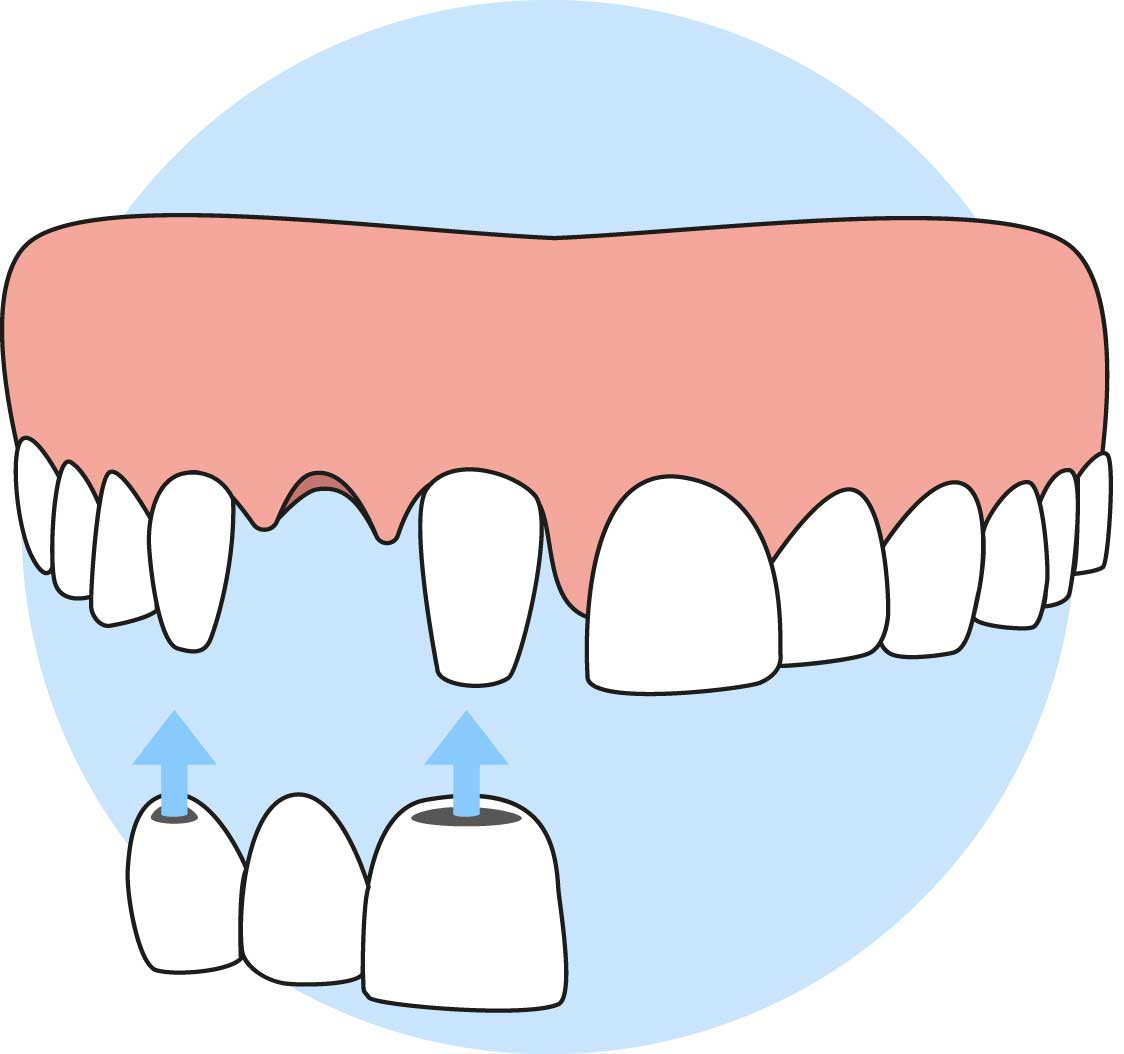
A dental bridge is a fixed restoration that spans the gap left by a missing tooth. It works by crowning the two teeth on either side of the gap — called abutment teeth — and suspending a false tooth (called a pontic) between them.
The result is a connected unit of three crowns cemented permanently in place. It does not come in and out, and patients maintain it the same way they would natural teeth, with the addition of a floss threader or interdental brush to clean underneath the pontic.
Bridges are typically completed over two appointments and do not require surgery.
What is a Dental Implant
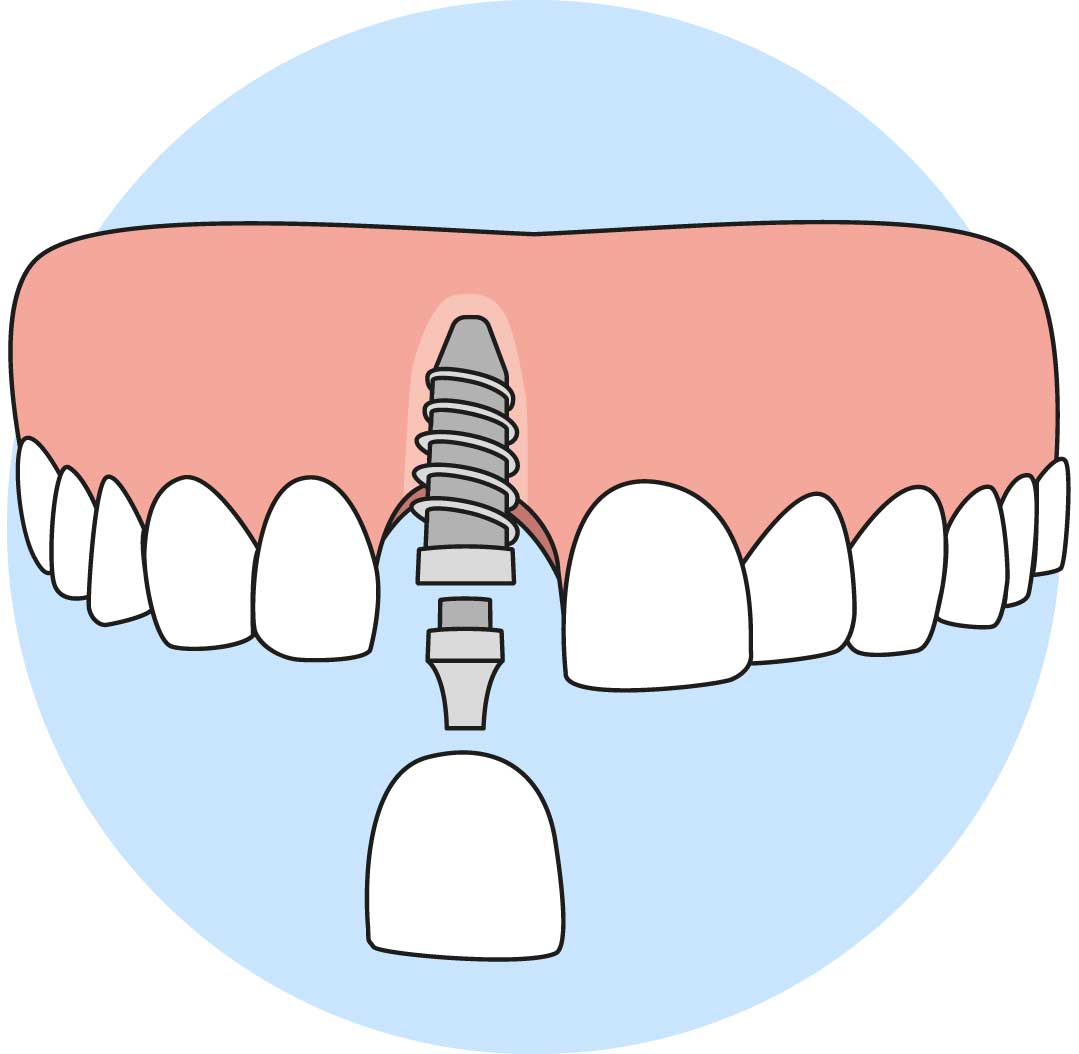
A dental implant is a titanium post placed surgically into the jawbone to replace a missing tooth root. Once the implant integrates with the bone — a process called osseointegration — a crown is placed on top. The end result is a single, self-supporting tooth that functions independently. It does not rely on adjacent teeth for support, and it preserves the jawbone beneath it by providing stimulation that roots normally provide.
Implants require a surgical procedure, a healing period, and more appointments overall. However, with proper care, they are designed to last a lifetime.
Bridge vs. Implant
Side-by-Side Comparison
| Dental Bridge | Dental Implant | |
|---|---|---|
| Procedure type | Non-surgical | Surgical |
| Adjacent teeth affected | Adjacent teeth require crowns as support | No effect on neighboring teeth |
| Timeline | 2–3 weeks | 3 to 6 months, but same-day implants available for qualifying patients |
| Bone preservation | Does not replace the root — bone resorption beneath the pontic continues over time | Integrates with the jawbone and transmits chewing forces, helping maintain bone density at the site |
| Lifespan | 10–15 years with proper care | 20+ years with proper care |
| Maintenance | Brushing plus a floss threader under the bridge | Standard brushing and flossing |
| Candidacy requirement | Healthy, stable adjacent teeth; no active gum disease | Sufficient jawbone density; good general health |
When a Bridge Is the Better Choice
A bridge is often the right answer in specific clinical situations — not because it is inferior to an implant, but because it genuinely suits the patient's circumstances better.
Your dentist may recommend a bridge if:
- The adjacent teeth already need crowns due to decay or existing restorations
- You do not have sufficient jawbone density for implant placement and prefer not to undergo bone grafting
- A faster treatment timeline matters — bridges can be completed in two to three weeks
- You do not qualify for same-day dental implants
- Medical conditions or medications make surgery inadvisable
Bridges also tend to have a lower upfront cost, which is relevant for patients weighing their options practically.
When an Implant Is the Better Choice
For patients who are good candidates, implants offer a significant long-term advantage. Because the implant acts as an artificial root, it stimulates the jawbone and prevents the gradual bone loss that occurs when a tooth root is absent.
An implant may be the stronger recommendation if:
- The adjacent teeth are healthy and untreated — there is no clinical reason to crown them
- Long-term bone health and facial structure preservation are a priority
- You want a restoration that functions as independently as possible from other teeth
- You are willing to invest more time upfront for a longer-lasting outcome
Implants are also easier to clean long-term. Because they function as individual teeth, they do not require special flossing techniques.
The Role of Bone Health
When a tooth is lost, the jawbone in that area gradually begins to resorb — a natural process that occurs when the root is no longer present to transmit chewing forces to the bone.
A bridge restores the visible tooth but does not replace the root, so some degree of bone resorption beneath the pontic is expected over time. A dental implant integrates with the jawbone and transmits chewing forces in a similar way to a natural root, which helps maintain bone density at the site.
For patients who have already experienced bone loss at the gap site, a bone grafting procedure may be recommended before implant placement to ensure there is sufficient volume for the implant to integrate successfully. Your specialist will assess this during the planning stage using a clinical examination and, where indicated, 3D imaging.
Bone volume is one of several factors your specialist will evaluate when recommending the right option for you.
Cost and Insurance in Dubai
Both treatments are covered under many insurance plans in Dubai, and the specifics depend on your policy and provider. At Drs. Nicolas & Asp Centers, we accept most major insurance cards for direct billing and handle all pre-approvals and paperwork on your behalf. For treatments that fall outside direct billing, the team assists with reimbursement documentation.
For a full breakdown of accepted plans and payment options, visit our Insurance and Payment Options page.
What the Decision Process Looks Like
At a specialist-led clinic, neither option is recommended without a full clinical assessment. That assessment typically includes:
- A clinical examination of the gap and surrounding teeth
- X-rays to evaluate bone density and root health of adjacent teeth
- A CBCT scan in many implant cases, to assess three-dimensional bone volume
- A conversation about your medical history, timeline, and priorities
The recommendation that comes out of that assessment is based on your specific anatomy, the condition of surrounding teeth, and what will serve you best over the long term — not a default preference for one option over another.
Frequently Asked Questions
Not always. Both are clinically sound solutions — the right choice depends on your specific situation. Implants are well-suited for patients with healthy adjacent teeth and sufficient bone volume, while bridges are a genuinely appropriate option when neighboring teeth already require crowns, or when bone loss makes implant placement more complex. Your specialist will assess your individual anatomy and guide you toward the option that serves you best long-term.
In many cases, yes — but timing matters. The longer a gap is left without root replacement, the more likely it is that bone resorption at the site will need to be addressed before an implant can be placed. If you are considering an implant eventually, it is worth raising this with your specialist early so your options remain as open as possible.
With proper care, most dental bridges last between 10 and 15 years. Lifespan depends on oral hygiene, biting forces, and the condition of the abutment teeth. Regular checkups allow your dentist to monitor the bridge and the health of the supporting teeth over time.
Yes — preparing adjacent teeth for crowns involves removing some enamel, which permanently alters that tooth structure. This is a factor your specialist will weigh carefully, particularly if the neighboring teeth are otherwise healthy and untreated.
From surgical placement to the final crown, the process generally takes between three and six months. Much of that time is the healing period required for osseointegration — the process by which the implant bonds with the surrounding jawbone. Patients who qualify may be suitable for same-day implant placement, where the implant and a temporary crown are placed in a single visit. Your specialist will assess candidacy during your consultation.
Yes. Both treatments are available across our four Dubai locations — Jumeirah, Marina Walk, Springs Souk, and Uptown Mirdif. Crown and bridge work is managed by our general dentists and Specialist Prosthodontists, while implant placement is carried out by our Specialist Oral Surgeons, Oral and Maxillofacial Surgeons, and Specialist Periodontists and Implantologists. Your reception team can confirm availability and book you with the right specialist for an initial assessment.
Coverage varies by plan. Many insurance policies cover bridges under restorative dentistry; implants are less commonly covered but are included under select plans. At Drs. Nicolas & Asp Centers, we handle insurance pre-approvals and verify your coverage before treatment begins, so you have a clear picture before any decisions are made.
Not sure where to start? A consultation is the right first step.
At Drs. Nicolas & Asp Centers, our specialist team assesses your specific situation — bone health, adjacent tooth condition, timeline, and goals — before making any recommendation. We have been helping patients in Dubai restore missing teeth since 1991.
Book your appointment online or call us on 04 394 7777. We are available across Jumeirah, Marina Walk, Springs Souk, and Uptown Mirdif.